Woz just wanted a computer that he could have for himself. Computers at the time came in metal boxes the size of the room you’re in right now and only people with a degree on how to use a computer were the only ones who knew how to use them. But Jobs saw that these electronic devices could be one of the most useful tools in the history of mankind and simple enough to use, so everybody could utilize the power.
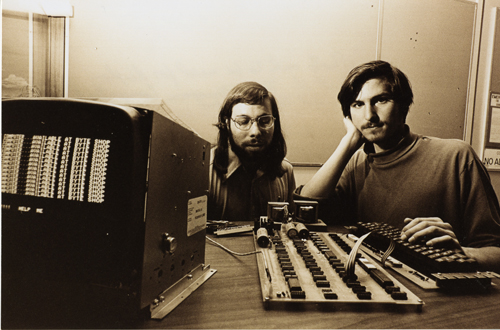
The Homebrew Computer Club: a group full of geeks in Silicon Valley at the time, was where it all began. Steve and Woz did everything to make "The Apple 1 Computer" possible. Steve sold his VW Camper van to buy parts for the computers and their first production plant was Steve's parent’s garage. They began to sell the units to local electronics stores and members of the club, this made a profit. For the first time people could buy a pre-assembled computer at an affordable price.
The company was officially incorporated in 1977 as Apple Computer, Inc. In that year they designed the Apple II Computer, arguably the first Personal Computer (PC), the Apple II was the first computer anyone could buy (at a price of $666) and the first anyone could use without any prior training. Steve and Woz wanted to make a statement by having the Apple II as the first computer in a plastic case, "like a TV set" as Woz said. At the time Apple was the largest Personal Computer company in the industry, but at that time however, there wasn’t much of a personal computer industry as it was mainly business that used PC’s.
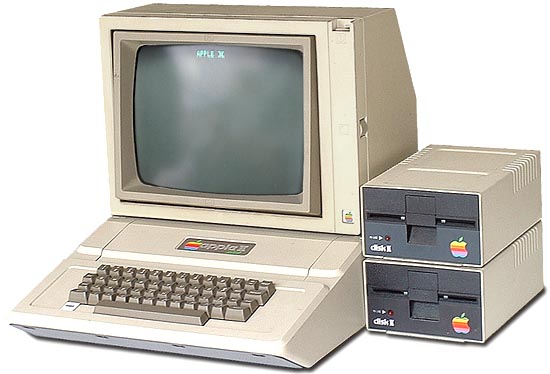
In the early 80’s competition came for Apple as others like international computer company, IBM started to move into the Personal Computer industry. However there was still a problem with the idea of computing for the masses; computers still seemed boring and technical to use, people weren’t going to invest into something like that for the home. There needed to be something that would make computers more effective and consumer friendly.
Xerox 1979. A team of engineers at Xerox in Palo Alto created a computer called the Xerox Alto, which included something called 'WIMP' (Windows, Icons, Mouse, and Pulldown menus). This is what we know today as the Graphical User Interface (GUI) and every consumer operating system, like Windows and Mac OS X uses this as the main way for the user to use the computer. Xerox never saw the potential in this invention and it was never released to the public, but on a visit to a demonstration at Xerox, there was someone who did. Steve Jobs knew this was the way forward and decided to create a consumer computer with a mouse and a GUI. Interestingly, Bill Gates was also at this demonstration, but the GUI only made its way into Microsoft in 1985, in the form of Windows 1.0 (Apple sued Microsoft over this).

The Apple Lisa released in 1983, was the first consumer computer with a mouse and a GUI. The problem was that this was $10,000 and rather big. Steve needed to create something that was consumer friendly.
As IBM began to dominate the industry, Apple was designing something that would make history. The Apple Macintosh was unveiled to the world on January 24th 1984, a historic day that, I believe should be taught in history lessons! Your probably using a Windows PC at the moment and Bill Gates wouldn’t mean anything if it wasn’t for the Macintosh. Before this, to use a computer most people had to type text commands to run an application. For the first time, normal people could pick up a mouse and naturally move the cursor to whatever they want to open, run, etc. See the video below to view the amazing unveiling of the Macintosh in 1984 -
This is how Microsoft Windows came around, and because of that how Apple failed. Soon I’ll continue our look into the career of Steve Jobs and how he came back on top in the 2000’s.
The predecessor to the Graphical User Interface is featured in this video of Douglas Engelbart, who invented the mouse and the idea of a GUI.
